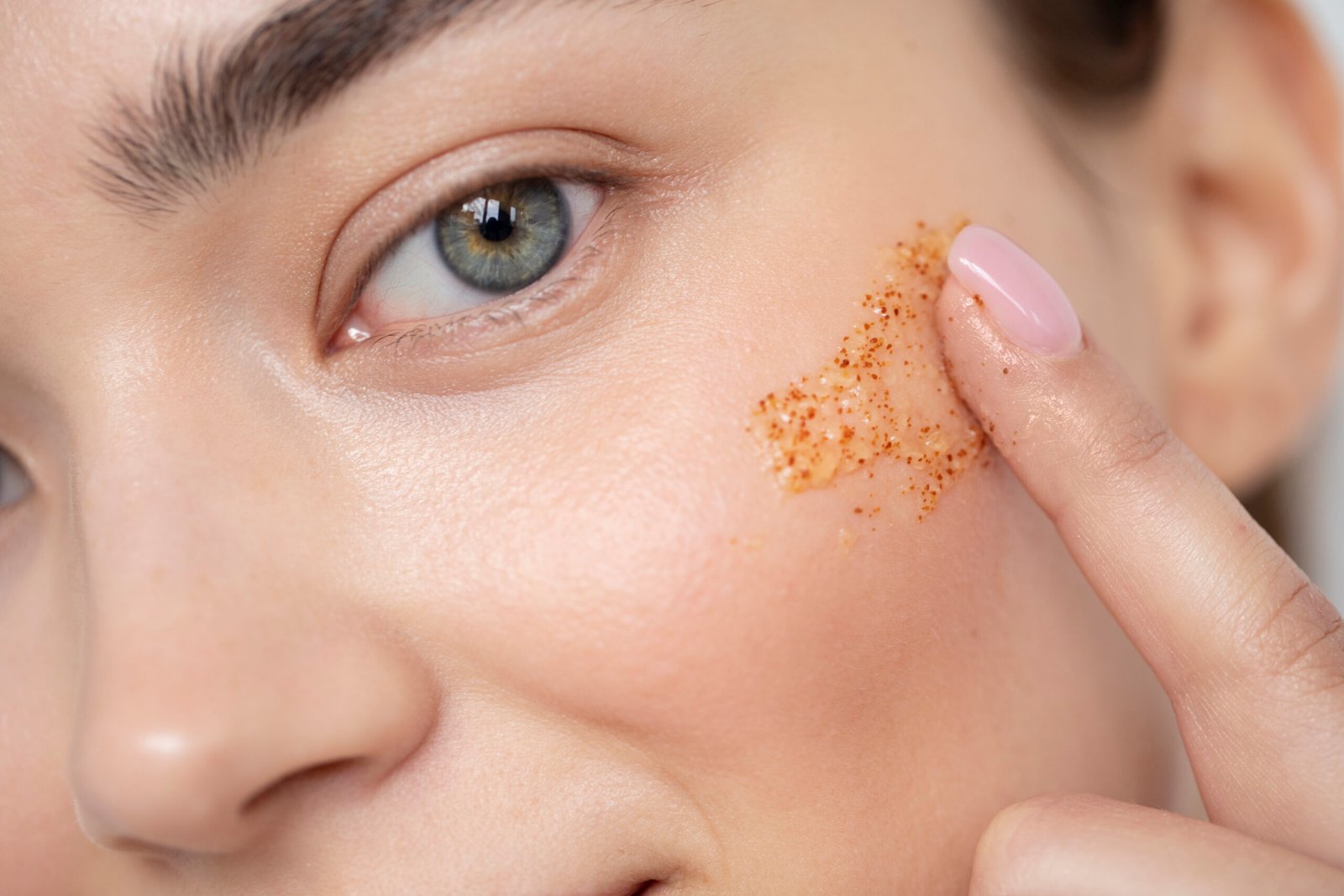
Exfoliation is everywhere. Toners with acids, exfoliating serums, scrubs, masks, pads. At some point, many of us start believing that if exfoliating is good, doing it more often must be even better. That’s usually where the problem begins.
Over-exfoliating is one of the most common skincare mistakes, especially today, when trends push for smooth, glowing, “glass-like” skin as fast as possible. The irony is that exfoliating too much often leads to the exact opposite result.
Instead of glow, the skin becomes irritated, sensitive, tight, and unpredictable.
If your skincare routine suddenly feels like it’s working against you, over-exfoliation might be the reason.
Exfoliation is meant to help the skin shed dead cells and renew itself. But your skin already knows how to do that on its own. When you exfoliate too often, or with products that are too strong, you disrupt the skin’s natural balance and damage its protective barrier.
That barrier is essential. It keeps moisture in and irritants out. Once it’s compromised, everything starts to feel “off”.
One of the first signs is redness that doesn’t go away. The skin may feel warm or sting when you apply products that never caused issues before. Even gentle cleansers or moisturizers can suddenly burn.
Another common sign is dryness combined with oiliness. The skin may look shiny, but at the same time feel tight or flaky. This happens because the skin is dehydrated and tries to compensate by producing more oil.
Breakouts are also very common. Many people assume they need to exfoliate more to “fix” them, but in reality, inflammation from a damaged barrier can trigger acne, clogged pores, and irritation.
Over time, over-exfoliation can lead to more serious issues. The skin becomes more sensitive, more reactive, and more prone to hyperpigmentation. Inflammation slows down healing and can even accelerate visible signs of aging by weakening the skin’s structure.
The good news is that skin can recover.
The first and most important step is to stop exfoliating completely. That means no acids, no scrubs, no exfoliating toners, and often no retinoids for a while. Giving your skin a break is not “doing nothing” — it’s allowing it to repair itself.
This is the moment to simplify your routine as much as possible. A gentle cleanser, a hydrating moisturizer, and sunscreen during the day are more than enough. Look for products that focus on soothing and repairing the barrier rather than “treating” or “correcting” the skin.
Ingredients like ceramides, glycerin, panthenol, squalane, or colloidal oatmeal can make a huge difference during this phase. Fragrance-free formulas are especially important when the skin is compromised.
Sun protection is non-negotiable. Over-exfoliated skin is extremely vulnerable to UV damage, which can worsen redness and pigmentation.
Healing doesn’t happen overnight. Depending on how irritated the skin is, recovery can take anywhere from a few days to several weeks. The key is patience and consistency.
Once your skin feels calm again — no stinging, no tightness, no redness — exfoliation can be reintroduced slowly. For most people, one or two times per week is enough. Gentle acids or mild exfoliants tend to work better than harsh scrubs or high concentrations.
Exfoliation should never hurt. Healthy skin doesn’t burn, sting, or feel uncomfortable. If it does, that’s your sign to stop.
At the end of the day, great skin doesn’t come from doing more. It comes from doing what your skin actually needs. Balance, not aggression, is what leads to long-term results.
If your skin feels overwhelmed, chances are it’s asking for less — not more.
